
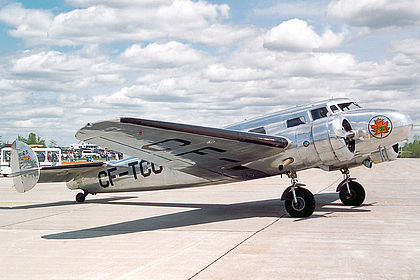
On September 1, 1937, a twin-engine Lockheed 10A Electra departed Vancouver for Seattle. The flight was short and modest by modern standards, but it marked the beginning of Trans-Canada Air Lines and a new era in Canadian commercial aviation.
The aircraft carried two passengers and mail on the roughly 200-kilometre international journey. Less than an hour after leaving Vancouver, it arrived in Seattle. Although the flight did not cross Canada or even connect two Canadian cities, it was the first scheduled service operated by the airline that would eventually become Air Canada.
Trans-Canada Air Lines had been created only a few months earlier. The federal government established the airline through the Trans-Canada Air Lines Act, which received royal assent on April 10, 1937. Canadian National Railways was given responsibility for organizing and operating the new carrier.
Federal cabinet minister C.D. Howe strongly supported the airline’s creation, believing Canada needed a national air service capable of connecting its widely separated regions. At the time, smaller regional and bush operators served Canadian aviation. The country lacked a single airline with the resources and mandate to establish a coast-to-coast passenger network.
The Vancouver-to-Seattle route gave the new company an opportunity to begin operating while it prepared for the much greater challenge of crossing Canada. TCA initially acquired two Lockheed 10A Electras from Canadian Airways and another from the United States. The Electra was a modern all-metal monoplane powered by two radial engines and capable of carrying ten passengers.
For passengers accustomed to lengthy railway journeys, aircraft such as the Electra offered a glimpse of a much faster future. However, building a national airline required more than simply purchasing aircraft. TCA needed trained crews, maintenance facilities, weather-reporting services, radio navigation stations, and suitable airports along its proposed routes.
Canada’s geography made the undertaking particularly difficult. Aircraft had to cross the Rocky Mountains, operate over the sparsely populated Canadian Shield, and contend with rapidly changing weather. Many communities had limited aviation infrastructure, while reliable night flying remained a developing capability.
Following survey and proving flights, TCA introduced scheduled passenger service between Vancouver and Montreal on April 1, 1939. The trip took approximately 15 hours of flying time and included several stops. This was still a major improvement over rail travel, which required several days to cover the same distance.
TCA expanded rapidly during and after the Second World War. Its early Electras were joined by larger aircraft, including the Lockheed 14 Super Electra, Lockheed Lodestar, Douglas DC-3, and Canadair North Star. The airline also operated wartime transatlantic services using modified Lancaster aircraft, helping establish the experience needed for regular postwar routes between Canada and Europe.
During the 1950s, TCA entered the turbine era with the Vickers Viscount. It later introduced the larger Vickers Vanguard and, in 1960, the Douglas DC-8 jet. The company also became an important technological innovator. Its ReserVec system, developed during the 1950s, made TCA the first airline to use a computerized reservation system with remote terminals.
On January 1, 1965, Trans-Canada Air Lines officially became Air Canada. By then, the small airline that began with a short flight down the Pacific coast had developed into an international carrier.
That first Vancouver-to-Seattle service was unremarkable by today’s global airline network. Its significance, however, lies in what followed. The flight represented Canada’s commitment to building a national air transportation system, one capable of overcoming distance, connecting communities, and giving the country a lasting presence in international aviation.