
For almost three decades, Garmin has been shaping the modern GA cockpit. From the original GPS 155 and GNS 430 to the G1000, G3X Touch and GTN Xi series, each generation has brought pilots one step farther away from the classic “six-pack” and into an increasingly integrated flight deck.
Garmin has now taken another major step with the recently announced AXIS flight display system. It’s a whole rethink of how avionics should be installed, run, and maintained. By combining flight displays, IFR navigation, communications, and audio into a single display, Garmin has simplified the architecture of the general aviation cockpit.
Perhaps the biggest advance of all is for Canadian aircraft owners, where installation costs can sometimes be as much as the avionics themselves. Traditionally, improving an aircraft panel meant adding boxes. There’s a navigator in the radio pile. Another slot holds an audio panel. Then one or two COM radios. Behind the panel lies a complex web of wires, connectors, mounting trays, and cooling requirements. More parts mean longer installation times, more difficult troubleshooting, and more expensive maintenance in the future.
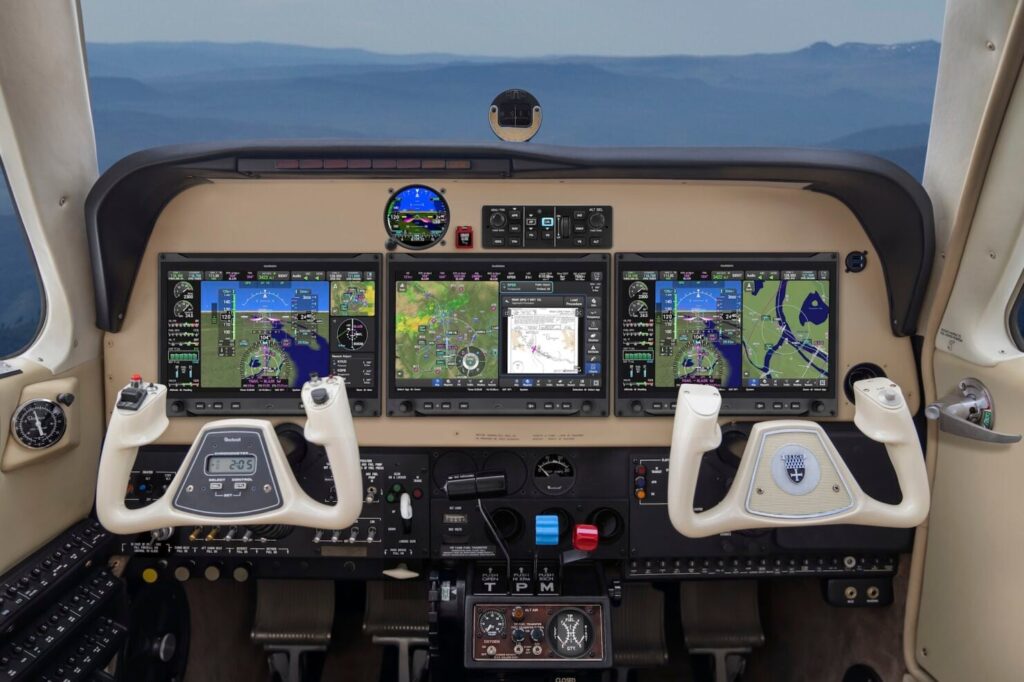
AXIS challenges this model. The 11.6-inch display is also available with an IFR-certified GPS navigator, NAV/COMM radios, and a four-place audio panel built directly into the display. The pilot speaks to one integrated system, not several separate avionics talking to each other. The results are fewer parts, less wiring, less weight, and a tidier panel.
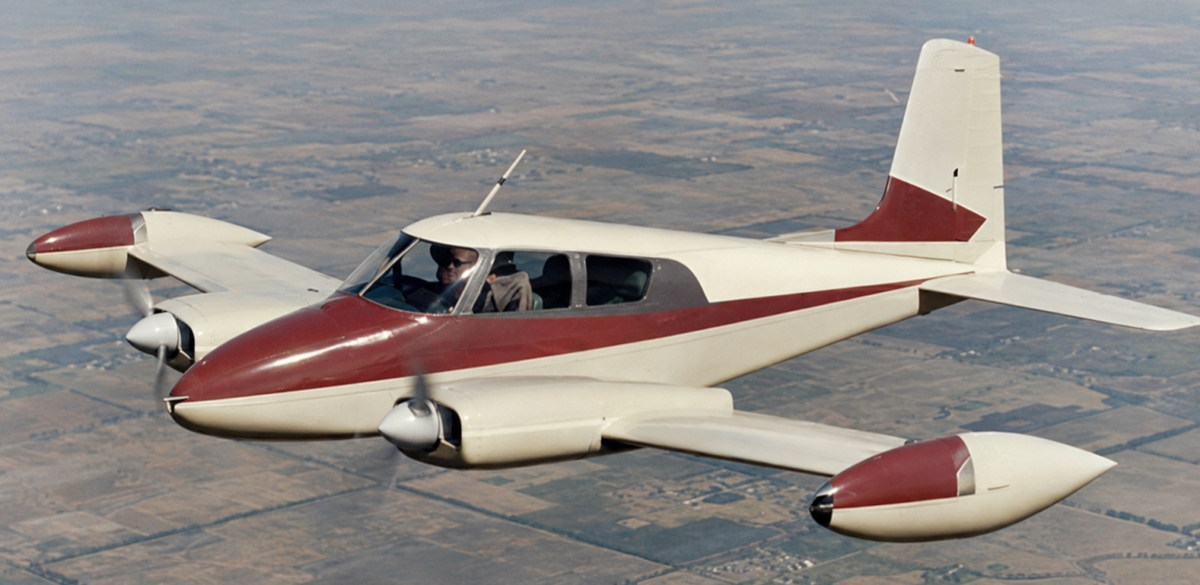
Many Canadian aircraft are legacy Cessnas, Pipers, Beechcrafts, and Mooneys, still mechanically excellent but flying on decades-old avionics. Owners typically shy away from modernizing, since the installation labour can quickly outweigh the cost of the equipment. Anyone who has owned an older aircraft knows that pulling a radio often reveals decades of undocumented modifications, abandoned wiring, and unanticipated repairs. Anything that reduces installation time is excellent news.
Garmin has also made AXIS surprisingly versatile. The system will eventually be available in three sizes, allowing builders and owners to customize the panel to the available space. Displays are available as primary flight displays or multifunction displays with engine monitoring, synthetic vision, and split-screen functionality. Experimental aircraft can have as many as six displays, while certified aircraft can have as many as four.
Equally significant is what Garmin chose not to do. AXIS is compatible with many existing Garmin sensors, transponders, autopilots, and accessories already in G3X installations, rather than forcing owners to replace all components in their aircraft. Garmin even kept the same panel cut-outs and mounting locations as many G3X Touch displays, which could allow existing owners to upgrade without rebuilding the entire instrument panel.
Interoperability might make the retrofit process easier for aircraft maintenance engineers and avionics technicians. Canadian operators will be pleased to see Garmin continuing to emphasize physical controls. The screens may be modern touchscreens, but there are dedicated knobs and buttons for the important functions. Anyone who has tried to work a touchscreen in turbulence knows why that decision matters.
Beyond the hardware, AXIS shows where cockpit technology is going. Bluetooth and Wi-Fi connectivity provide database updates, wireless flight planning, and interaction with Garmin Pilot and ForeFlight. In the future, it will be compatible with Garmin’s PlaneSync technology, meaning you’ll get automated database updates, remote monitoring of the aircraft’s status, and simplified uploading of flight logs. These characteristics turn airplane ownership from a stand-alone onboard asset into a connected environment. Pilots are increasingly expecting that level of connectivity. Many already use tablets for weather, electronic flight baggage, and navigation. AXIS only makes such workflows fit more naturally into the certified cockpit.
That said, AXIS won’t solve every problem. Certification remains the bottleneck in Canada. Garmin’s FAA Supplemental Type Certificate covers hundreds of aircraft models, and Canadian approvals will continue in the wake of Transport Canada validation processes. Owners may need to wait until their specific aircraft is eligible to participate.
Cost will be a consideration, too. Lower installation hours may reduce the overall project cost, but complex integrated avionics are never cheap. The economics will depend heavily on the current equipment of each aircraft, desired capability, and installation complexity. Still, the long-term value proposition looks compelling.
If you’re a homeowner considering a comprehensive update to your panels, it may be more economical to purchase a single integrated system rather than numerous separate units. The AXIS environment is built for experimental builders, and its flexibility enables near-infinite customization while preserving Garmin’s recognizable operating philosophy.
From an aviation maintenance perspective, fewer line-replaceable units mean fewer potential failure modes. Simplified wiring should minimize troubleshooting time, and future software updates should be easier to manage than multiple separate avionics.
Garmin has a history of changing the game in general aviation. The GNS 430 changed GPS navigation forever. The G1000 set the standard for integrated flight decks. The G3X Touch provided sophisticated glass cockpits to both owner-built and certified aircraft. AXIS is the next step.
For Canadian aircraft owners pondering their next avionics upgrade, AXIS may be more than just another display. It may be the solution to your long-awaited panel upgrade.